
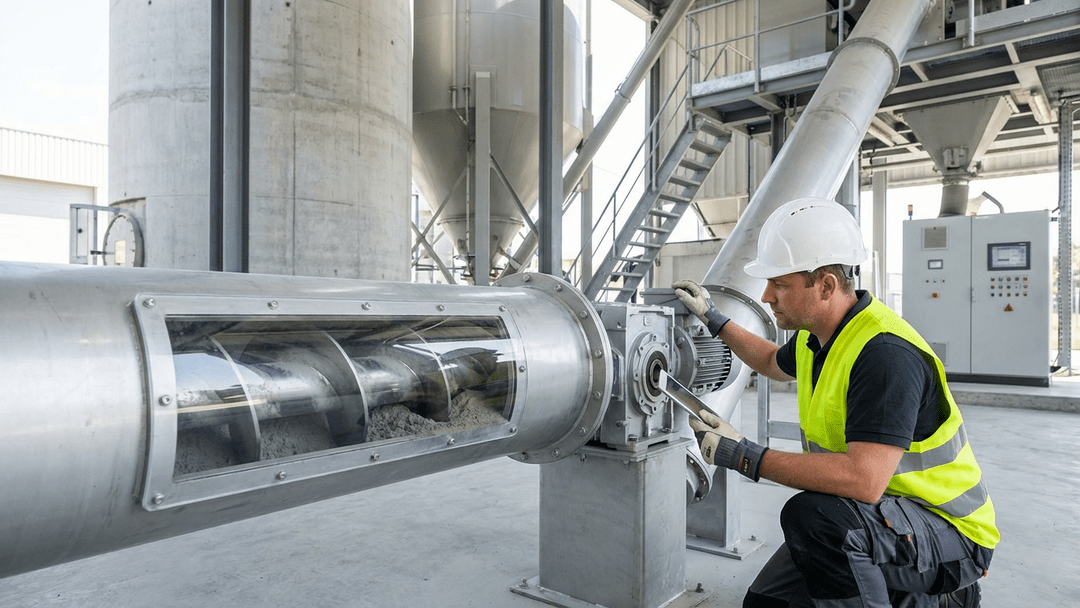
Screw conveyors are the workhorses of material handling in a concrete batching plant. These simple, robust machines are responsible for the critical task of transporting cement and other fine powders from storage silos to the weigh batcher with precision and reliability. A well-maintained screw conveyor ensures accurate batching and consistent production, while a neglected one can be a source of constant frustration, causing jamming, motor overloads, and costly downtime.
This technical guide covers the design of screw conveyors, essential maintenance practices, and how to troubleshoot common problems, with a special consideration for operating in diverse South African climates.
Design and Operation
A screw conveyor consists of a helical screw blade, known as a “flighting,” that rotates within a trough or tube. As the screw rotates, it pushes the material along the trough from the inlet to the outlet. The design of the conveyor is tailored to the material it is handling.
- Diameter and Pitch: The diameter of the screw and the distance between the flights (the pitch) determine the conveyor’s capacity.
- Incline: Screw conveyors can operate at an incline, but their efficiency decreases as the angle increases. For steep inclines, a higher rotational speed or a different conveyor type may be necessary.
- Drive System: The motor and gearbox are sized based on the conveyor’s length, incline, and the density of the material being transported.
Nsimbi Engineering Solutions provides screw conveyors that are correctly specified for the demanding task of cement conveying, ensuring optimal performance and longevity.
Essential Maintenance Schedule
Preventive maintenance is the key to a long and trouble-free life for your screw conveyor. A regular maintenance schedule should include the following checks:
| Frequency | Maintenance Task |
|---|---|
| Weekly | Inspect Drive System – Check for oil leaks from the gearbox and listen for any unusual noises from the motor or bearings. |
| Monthly | Check Hangar Bearings – These intermediate bearings support the screw along its length. Inspect them for wear and ensure they are properly lubricated. A worn hangar bearing can cause the screw to sag and jam. |
| Quarterly | Inspect Flighting – Check the edges of the screw flighting for signs of wear. Abrasive materials like cement will gradually wear down the flighting, reducing the conveyor’s efficiency. |
| Annually | Full Inspection – Conduct a thorough inspection of the entire conveyor, including the trough, inlet and outlet spouts, and all bearings and seals. Check for any signs of metal fatigue or corrosion. |
Troubleshooting Common Screw Conveyor Problems
Even with regular maintenance, problems can arise. Here’s how to troubleshoot the most common issues:
-
Problem: Conveyor is Jamming or Stalling.
- Cause: This is often due to “flooding,” where too much material enters the conveyor at once. It can also be caused by a foreign object in the conveyor or a worn hangar bearing causing the screw to bind.
- Solution: Check the silo’s discharge gate to ensure it is not stuck open. Inspect the conveyor for foreign objects. Check hangar bearings for excessive wear.
-
Problem: Motor is Overloading.
- Cause: Similar to jamming, this is usually caused by trying to move too much material. It can also be a sign that the screw is binding due to worn bearings or a bent flight.
- Solution: Reduce the feed rate into the conveyor. If the problem persists, inspect the conveyor for mechanical issues.
-
Problem: Inconsistent Material Flow.
- Cause: This can be caused by worn flighting, which reduces the conveyor’s efficiency, or by material sticking to the trough.
- Solution: Inspect the flighting for wear. If material is sticking, consider installing a vibrator on the trough to keep the material flowing.
Seasonal Considerations for South African Climates
South Africa’s diverse climates present unique challenges for screw conveyor operation.
- Highveld (Gauteng, Free State): During the dry winter months, static electricity can build up, causing fine cement powder to cling to the conveyor surfaces. Ensure the conveyor is properly earthed to dissipate static charges.
- Coastal Regions (KwaZulu-Natal, Western Cape): The high humidity in these areas can cause moisture to enter the conveyor, leading to caking and blockages. Ensure all seals and gaskets are in excellent condition to prevent moisture ingress.
Conclusion
The screw conveyor is a vital piece of equipment in any concrete batching plant. Its reliable operation is essential for maintaining production schedules and ensuring batch accuracy. By understanding its design, implementing a rigorous preventive maintenance schedule, and knowing how to troubleshoot common problems, you can ensure your screw conveyors operate efficiently for years to come.
For high-quality screw conveyors, hangar bearings, and other replacement parts designed to withstand the rigors of cement handling, trust the experts at Nsimbi Engineering Solutions. Their components are engineered for the South African environment, providing the reliability you need to keep your plant running at peak performance.