
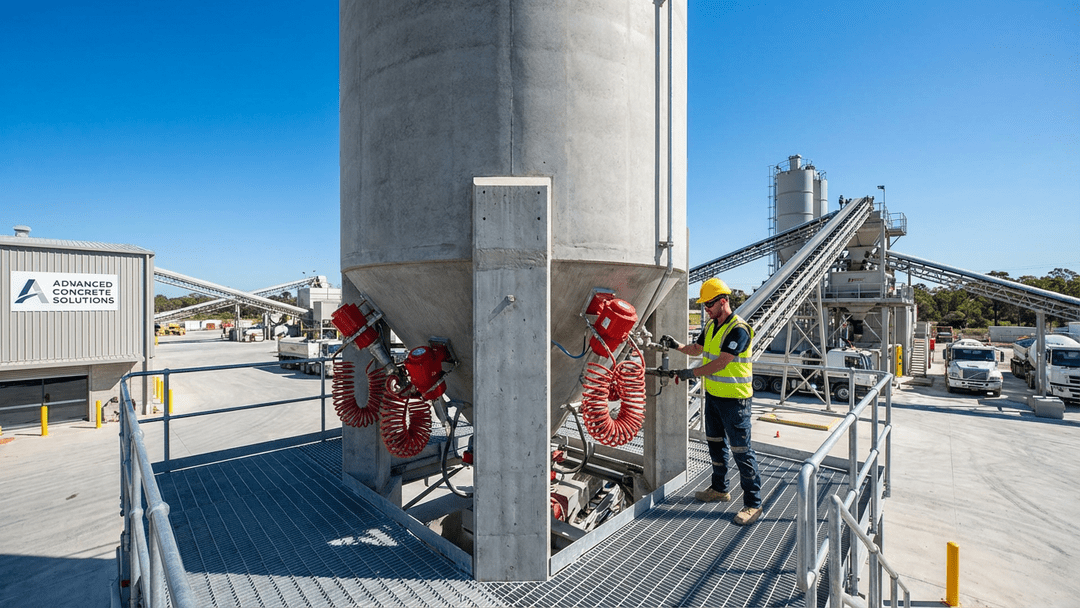
In a busy concrete batching plant, the consistent flow of materials is the lifeblood of the operation. Any interruption in the movement of cement, sand, or aggregate can bring production to a grinding halt. One of the most common and frustrating problems is “bridging” or “rat-holing” in silos, where material compacts over the outlet, stopping the flow entirely. The solution to this costly issue is often a simple but powerful tool: the pneumatic vibrator. Pneumatic vibrators for batching plants are essential devices that apply controlled vibrations to silos and hoppers, breaking up compacted material and ensuring a smooth, consistent discharge. This article explores how these vibrators work, their critical role in maintaining batching plant efficiency, and how to optimize their use for maximum productivity.
The Problem: Bridging and Rat-Holing
Bridging occurs when material interlocks and forms a solid arch above the silo’s outlet. The material below the arch may discharge, but the arch itself prevents any more material from flowing down.
Rat-holing is a similar problem where a narrow channel of material flows out directly above the outlet, but the rest of the material remains stuck to the silo walls. Both issues lead to inaccurate batching, production delays, and the dangerous task of manually trying to dislodge the compacted material.
These problems are especially common with fine powders like cement, which can be affected by moisture and compaction. This is where a pneumatic vibrator becomes an indispensable tool.
How Pneumatic Vibrators Solve Flow Problems
A pneumatic vibrator, powered by compressed air, creates a series of rapid impacts or vibrations on the silo wall. This energy is transferred into the stored material, breaking the inter-particle friction that causes bridging and rat-holing. The material is “fluidized,” allowing it to flow freely and consistently out of the silo.
Nsimbi Engineering Solutions offers robust pneumatic vibrators for batching plants designed for the harsh environment of a batching plant. Their proper installation and use can transform an unreliable silo into a model of efficiency.
Before and After: A Case Study in Productivity
A mid-sized ready-mix operator in Gauteng was experiencing frequent bridging in their primary cement silo, leading to an average of 45 minutes of downtime per day. This translated to three lost truckloads and significant labor costs trying to clear the blockages.
Before Vibrator Installation:
- Daily Downtime: 45 minutes
- Lost Production: ~18m³ of concrete per day
- Associated Costs: Labor, fuel, potential late delivery penalties
After installing a correctly sized pneumatic vibrator from Nsimbi on the silo cone, the results were immediate.
After Vibrator Installation:
- Daily Downtime: < 5 minutes (for routine checks)
- Lost Production: Eliminated
- Productivity Gain: An extra 90m³ of concrete dispatched per week
The investment in the vibrator paid for itself within the first week of operation through increased productivity and reduced labor costs.
Optimizing Vibrator Use: Placement and Control
To be effective, pneumatic vibrators for batching plants must be used correctly. Simply attaching it anywhere and running it continuously is inefficient and can even damage the silo.
- Optimal Placement: The vibrator should be mounted on the silo’s sloping cone, typically about one-third of the way up from the outlet. This is the most common area for bridges to form.
- Frequency and Intensity: The goal is to use the minimum vibration necessary to start the material flowing. Excessive vibration can actually cause the material to compact further.
- Control Systems: The most efficient method is to use a timer or to integrate the vibrator with the batching control system. The vibrator should only run for a few seconds at a time, just long enough to initiate flow. Running it continuously wastes compressed air and accelerates wear on the silo and the vibrator itself.
Conclusion
Pneumatic vibrators in batching plants are not a luxury; they are a necessity for any modern, efficient concrete batching plant. They are the frontline defense against the costly and disruptive problems of material bridging and rat-holing. By ensuring a consistent and reliable flow of materials, these devices directly contribute to accurate batching, reduced downtime, and a safer working environment.
Investing in a high-quality pneumatic vibrator from a trusted supplier like Nsimbi Engineering Solutions is a small price to pay for the significant gains in productivity and reliability it delivers. If you are still battling material flow problems in your silos, it’s time to harness the power of vibration. Contact Nsimbi today to find the right pneumatic vibrator to keep your materials—and your profits—flowing.