
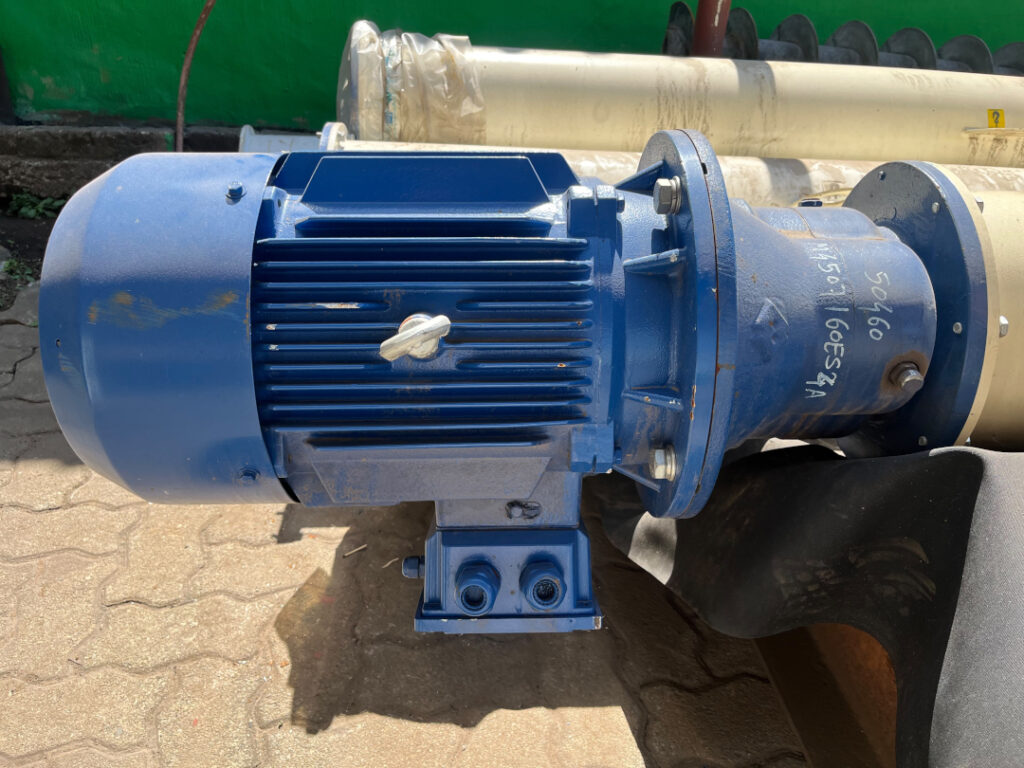
Your concrete batching plant relies on a complex network of conveyors to move thousands of tonnes of aggregate, cement, and fly ash every day. At the heart of every conveyor drive system sits the conveyor gearbox .
This unassuming component is the workhorse that converts high-speed motor power into the low-speed, high-torque force needed to drive your conveyor belts. When it runs smoothly, material flows without interruption. But when issues arise—overheating, unusual noises, or sudden torque loss—maintenance teams are on the front lines to identify and correct problems before they cause costly downtime .
In this guide, we will explain what a conveyor gearbox is, the common types used in batching plants, how to select the right one, and the maintenance practices that keep your plant running.
What Is a Conveyor Gearbox?
A conveyor gearbox—also called a speed reducer or gearmotor—is a mechanical device that reduces the rotational speed of an electric motor while simultaneously increasing the torque delivered to the conveyor drive pulley .
In simple terms: your motor spins fast but with relatively low turning force. Your conveyor needs to move slowly but with immense pulling power. The gearbox bridges this gap using a set of gears that multiply torque while reducing speed.
In a concrete batching plant, conveyor gearboxes are used on:
- Aggregate feed conveyors: Moving stone and sand from storage bins to the weigh batcher.
- Cement screw conveyors: Transporting fine powders from silos to the weigh hopper.
- Reclaim conveyors: Moving material from stockpiles back into the production system.
Common Types of Conveyor Gearboxes in Batching Plants
Several types of conveyor gearboxes are commonly found in concrete batching plants. Each has its own strengths and ideal applications.
1. Shaft-Mounted Gearboxes (Helical)
These gearboxes mount directly onto the conveyor drive shaft, eliminating the need for separate coupling devices. The output shaft is hollow and slides over the conveyor drive shaft, with a key to transmit torque .
Key features:
- Helical gearing: Provides smooth, quiet operation with efficiency in the 96% range, minimising energy consumption .
- Torque arm mounting: A torque arm prevents the gearbox housing from rotating .
- Built-in backstop: Prevents the conveyor from running backwards under load, a critical safety feature .
Advantages: Compact design, easy installation, low maintenance.
Typical application: Aggregate belt conveyors in concrete batching plants .
Real-world example: A concrete plant that switched to helical shaft-mounted gearboxes saw conveyor drive currents drop from 70-75 amps to approximately 40 amps, delivering substantial energy savings and faster payback .
2. Worm Gearboxes
Worm gearboxes use a worm screw that turns a worm wheel to achieve speed reduction. They are known for their high reduction ratios in a compact package.
Key features:
- High reduction ratios: Can achieve ratios of 60:1 or higher in a single stage.
- Self-locking capability: In many configurations, the worm gear can prevent back-driving, acting as a brake .
- Cast iron or aluminium housings: Cast iron units offer better thermal dissipation for continuous duty .
Advantages: Compact, cost-effective, high reduction ratios.
Disadvantages: Lower efficiency (typically 50-85%) compared to helical gearboxes, generating more heat.
Typical application: Smaller conveyors, screw feeders, and lighter-duty applications.
3. Bevel Gearboxes
Bevel gearboxes use angled gears to change the direction of power transmission, typically by 90 degrees.
Key features:
- High torque capacity: Can handle over 10 kNm of torque .
- High power: Available in power ranges from 700 kW to 4,500 kW for heavy-duty applications .
- Robust construction: Designed for harsh environments and continuous operation .
Advantages: Handles heavy loads, changes drive direction.
Typical application: Heavy-duty aggregate conveyors and inclined belts.
How to Select the Right Conveyor Gearbox
Selecting the correct conveyor gearbox for your application is essential for reliability and efficiency. Here is a step-by-step approach :
Step 1: Determine Required Torque and Speed
Calculate the torque and speed required at the conveyor drive pulley. This depends on your belt length, material load, and conveyor incline.
Step 2: Calculate Overall Speed Ratio
Overall speed ratio = Motor speed ÷ Required conveyor speed
For example: 1725 rpm ÷ 20 rpm = 86.25:1
Step 3: Determine Gearbox Ratio and Pulley Arrangement
Decide how much reduction will come from the gearbox versus external pulleys or belts. A conveyor gearbox ratio of 10:1 to 30:1 is common, with additional reduction from V-belt drives .
Step 4: Apply Service Factor
Conveyors operating 3-10 hours per day with moderate shock loading typically require a service factor of 1.25. For V-belt drives, an additional overhung load factor of 1.5 applies .
Gearbox required design torque = (Required torque ÷ Pulley ratio) × Service factor
Step 5: Match Thermal and Mechanical Ratings
- Thermal rating: The gearbox must dissipate heat generated during continuous operation .
- Mechanical rating: The gearbox must handle peak loads without gear tooth failure .
- Overhung load rating: The gearbox output shaft must support the load from pulleys, sprockets, or coupling .
Step 6: Check Efficiency and Motor Power
Confirm the motor power is within the gearbox’s thermal input rating. A gearbox with 85% efficiency means 15% of motor power is lost as heat .
Common Conveyor Gearbox Faults and Troubleshooting
A conveyor gearbox operates under harsh conditions—abrasive dust, extreme temperatures, and near-continuous operation . Early detection of issues is critical for maintaining uptime.
1. Overheating
Symptoms: Operating temperature above manufacturer’s specifications; burnt smell from oil; dark oil colour; reduced viscosity .
Common causes:
- Inadequate or degraded lubrication.
- Gearbox overloaded beyond design capacity.
- Poor ventilation or blocked cooling fins.
Action steps:
- Replace oil with higher-quality lubricant with better thermal resistance .
- Check ventilation pathways and clean out dust and debris .
- Consult manufacturer if load requirements exceed design limits .
2. Oil Leaks
Symptoms: Visible oil streaks near seals, plugs, or housing joints .
Common causes:
- Worn or hardened shaft seals.
- High internal pressure from overheating or overfilling.
- Vibration or misalignment loosening housing bolts.
Action steps:
- Replace damaged seals and retorque housing bolts .
- Ensure gearbox breather is not clogged .
- Avoid overfilling—use manufacturer’s level indicators .
3. Abnormal Noise
Symptoms: Grinding, whining, or knocking sounds during operation .
Common causes:
- Worn or misaligned gears.
- Loose mounting bolts.
- Bearing failure due to contamination or insufficient lubrication.
Action steps:
- Perform vibration analysis if available .
- Realign shafts and couplings .
- Replace damaged gears or bearings .
4. Torque Loss
Symptoms: Conveyor hesitates, lags, or stops while the motor continues to turn .
Common causes:
- Rounded or worn gear teeth.
- Worn coupling keys or keyways.
- Improper gear mesh.
Action steps:
- Open gearbox for internal inspection .
- Replace visibly worn gears, shafts, or components .
- Consider upgrading to a more robust gearbox if torque demands have increased .
Preventive Maintenance Best Practices
A solid maintenance routine for your conveyor gearbox is essential for reliable operation and can drastically extend component life .
Lubrication
- Use the correct oil viscosity based on ambient temperature and load demands .
- Change oil per OEM intervals—more frequently in dusty or high-heat conditions .
- Check oil levels regularly. A gearbox that ran dry can fail in hours .
Alignment
- Regularly check coupling and shaft alignment .
- Misalignment causes vibration that accelerates bearing and gear wear .
Regular Inspections
- Conduct visual inspections for leaks, unusual noise, or vibration .
- Monitor temperature and noise levels during peak operation .
- Track vibration data where possible to identify wear patterns early .
Maintenance Records
- Maintain detailed logs of all maintenance activities, parts used, and inspections .
- Use these records to identify wear patterns and plan preventive maintenance .
When to Repair vs. Replace
Identifying the right moment to repair or replace a conveyor gearbox isn’t always straightforward. Use this guide :
Repair If…
- The issue is isolated (e.g., seal, bearing, or gasket failure)
- Housing and internal gears are still structurally sound
- Replacement parts are readily available
Replace If…
- The unit has recurring failures despite multiple repairs
- There is major internal damage or extensive gear wear
- The gearbox model is obsolete or parts are discontinued
The Bottom Line
The conveyor gearbox is the heart of your material handling system. When it runs smoothly, your plant operates at full capacity. When it fails, production stops.
Understanding the types available, how to select the right one, and how to maintain it properly will keep your conveyors moving and your plant profitable. Remember: regular lubrication, proper alignment, and early detection of issues are the keys to a long and reliable gearbox life.