The concrete production industry, long seen as a traditional, heavy-duty sector, is on the cusp of a technological revolution. The same forces of automation, the Internet of Things (IoT), and data analytics that have transformed other industries are now making their way into the batching plant and the mixer truck. This new wave of technology promises to usher in an era of unprecedented efficiency, quality control, and safety. For forward-thinking companies in South Africa, embracing these emerging technologies is not just about gaining a competitive edge; it’s about future-proofing their operations. This article explores the exciting future of concrete production automation and how modern components are laying the groundwork for the smart batching plant of tomorrow.
The Rise of the Automated Batching Plant
While basic automation has been a part of batching plants for years, the next generation of automation is far more sophisticated. Advanced systems, like those in MEKA batch plants, are moving towards “lights-out” operation, where the entire batching process, from material ordering to truck loading, is managed by a central computer with minimal human intervention.
Key Features of Advanced Automation:
- Integrated Supply Chain: The batching plant software can monitor material levels in the silos and automatically place orders with suppliers when levels are low.
- Dynamic Scheduling: The system can optimize the batching queue based on the location of the trucks and the schedules of the job sites, maximizing efficiency.
- Automated Quality Control: Real-time sensors for moisture and slump can automatically adjust the mix to ensure it meets specifications, flagging any deviations for review.
The Internet of Things (IoT) in Concrete Production
The Internet of Things refers to the network of physical devices, vehicles, and equipment embedded with sensors and software that allows them to connect and exchange data. In concrete production, IoT is bridging the gap between the plant, the truck, and the job site.
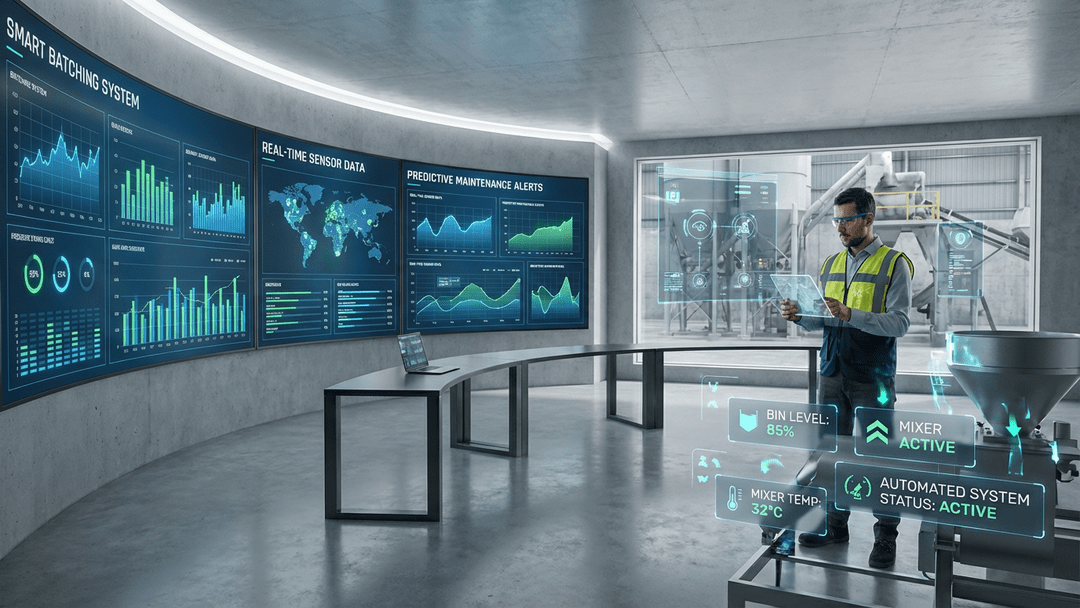
- Smart Sensors: Modern components like Bin Level Indicators are no longer just simple switches. An IoT-enabled bin level indicator can provide real-time data on the exact material level in a silo, accessible from any smartphone or computer. This allows for more efficient logistics and prevents unexpected material shortages.
- Connected Trucks: Mixer trucks equipped with GPS and sensors can transmit real-time data on their location, drum rotation speed, and concrete temperature. This allows dispatchers to have a complete overview of the fleet and enables them to divert trucks or adjust schedules as needed.
- Job Site Integration: Data from the truck can be shared with the contractor at the job site, providing an accurate ETA and information on the properties of the incoming concrete.
Predictive Maintenance: From Reactive to Proactive
One of the most powerful applications of IoT technology is predictive maintenance. Instead of waiting for a component to fail, predictive maintenance uses data from sensors to predict when a component is likely to fail, allowing maintenance to be scheduled before the failure occurs.
How it Works:
- Data Collection: A sensor on a gearbox monitors its temperature and vibration.
- Data Analysis: The data is sent to the cloud and analyzed by an AI algorithm that has been trained to recognize the signs of impending failure.
- Alert: When the algorithm detects an anomaly—a slight increase in vibration, for example—it sends an alert to the maintenance manager, recommending that the gearbox be inspected.
This approach can virtually eliminate unplanned downtime, saving companies millions in lost productivity and emergency repair costs. Modern components with integrated sensors are the building blocks of this predictive maintenance ecosystem.
A Roadmap for South African Contractors
Adopting this new technology does not have to be an all-or-nothing proposition. South African contractors can take a phased approach:
- Phase 1: Modernize Components. Start by upgrading to modern components that have sensor capabilities, such as smart bin level indicators and advanced water meters.
- Phase 2: Implement Basic Automation. Invest in a modern batching control system that can automate the dosing and mixing process.
- Phase 3: Connect Your Fleet. Equip your trucks with basic telematics to track their location and status.
- Phase 4: Embrace Predictive Analytics. Partner with a technology provider to implement a predictive maintenance program for your most critical components.
Conclusion
The future of concrete production is smart, connected, and data-driven. The batching plants and mixer trucks of tomorrow will be self-aware systems that optimize their own performance, anticipate their own maintenance needs, and communicate seamlessly with each other and with the people who manage them. By starting to invest in modern, sensor-ready components and automation systems today, South African concrete producers can lay the foundation for a more efficient, profitable, and resilient future.
Contact Nsimbi Engineering Solutions to learn more about the advanced components and MEKA batching systems that can start you on your journey to the smart plant of the future.