In the operation of a concrete batching plant, dust is an unavoidable byproduct. The transfer of cement and other fine materials creates airborne particulate matter that, if left uncontrolled, poses a significant threat to environmental compliance, worker health, and even the longevity of your equipment. A robust dust collector system is not merely an optional accessory; it is a fundamental component of a modern, responsible, and profitable batching operation. This article explores the critical benefits of effective cement dust management, the regulatory landscape in South Africa, and the compelling return on investment that a quality system, such as the one offered by Nsimbi Engineering Solutions, can provide.
The Hidden Costs of Uncontrolled Dust
Many operators view a dust collector as a capital expense and overlook the significant hidden costs associated with failing to control dust emissions:
- Environmental Fines: The National Environmental Management: Air Quality Act (NEMA:AQA) in South Africa sets strict limits on particulate emissions. Non-compliant operations face hefty fines, potential shutdowns, and reputational damage.
- Health Claims: Cement dust contains crystalline silica, a known carcinogen. Prolonged exposure can lead to serious respiratory illnesses like silicosis. The cost of a single health claim can easily dwarf the cost of a dust collection system.
- Equipment Damage: Abrasive cement dust settles on everything. It works its way into bearings, electrical contacts, and other sensitive components, causing premature wear and tear and leading to expensive repairs.
- Material Loss: The dust floating in the air is, in fact, valuable product. A study by the Cement Sustainability Initiative found that up to 1% of cement can be lost as dust in an uncontrolled system. For a plant using 100 tons of cement per day, this can amount to a ton of lost material daily.
| Hidden Cost Category | Potential Annual Cost (ZAR) |
|---|---|
| Environmental Fines (single event) | R 50,000 – R 5,000,000+ |
| Increased Maintenance & Repairs | R 20,000 – R 50,000 |
| Lost Material (100 tons/day plant) | R 250,000+ |
| Total Potential Annual Cost | R 320,000+ |
How Dust Collector Systems Work
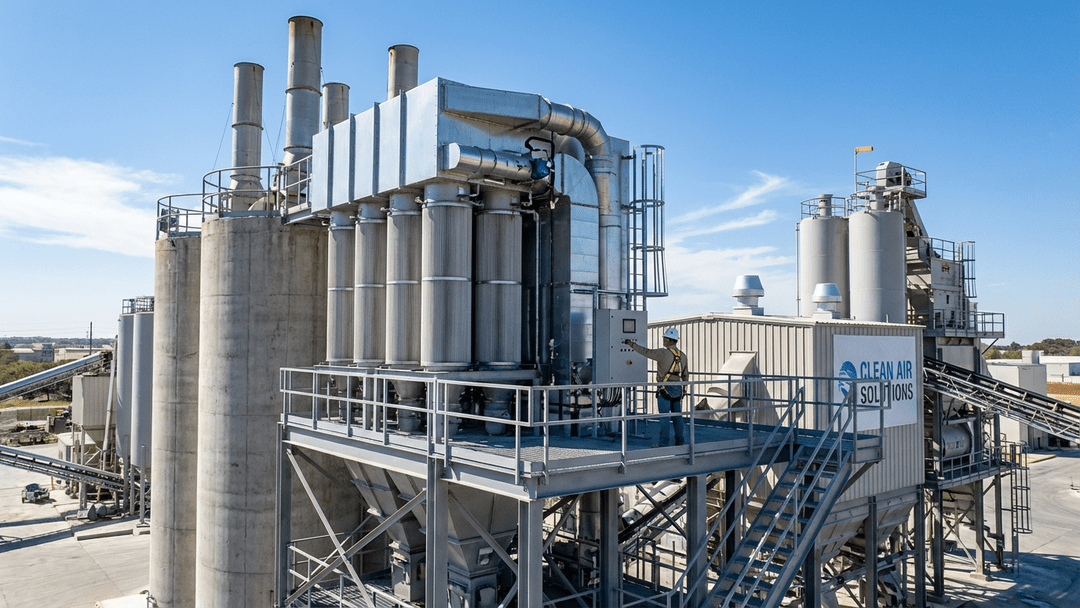
A typical dust collector for a batching plant operates like a large vacuum cleaner. It draws dusty air from key points, such as the silo filling pipes and the weigh batcher, and passes it through a series of filter bags or cartridges. The filters trap the dust particles, allowing clean air to be exhausted. A periodic pulse of compressed air then cleans the filters, causing the collected dust to fall back into the silo or a collection hopper, ready to be used.
Sizing and Maintaining Your System
Choosing the right size dust collector is critical for cement dust management. An undersized system will not be able to capture all the dust, while an oversized system will be inefficient and waste energy. The system must be sized based on the volume of air it needs to process, which is determined by the size of your silos and the rate at which they are filled.
Filter maintenance is the most important aspect of keeping your dust collector running efficiently. A regular maintenance schedule should include:
- Daily: Check the differential pressure gauge. A high reading indicates the filters are becoming clogged.
- Weekly: Inspect the pulse-jet cleaning system to ensure it is functioning correctly.
- Quarterly: Visually inspect the filter bags or cartridges for any signs of wear or damage.
The Investment Analysis
Considering the potential annual costs of uncontrolled dust, the investment in a quality cement dust management system from Nsimbi Engineering Solutions represents a remarkably sound financial decision. By preventing just one moderate environmental fine or by capturing the value of previously lost material over a few months, the system pays for itself. This calculation does not even include the invaluable benefits of a healthier workforce and a better relationship with the surrounding community.
Conclusion
A dust collector is not a cost center; it is a profit protector. It safeguards your business from regulatory penalties, protects your employees from health risks, extends the life of your valuable equipment, and conserves your raw materials. In the competitive South African construction market, the efficiency, safety, and compliance provided by an effective cement dust management system for effective cement batching plant dust control are no longer optional—they are essential for sustainable success.
Take control of your dust and your bottom line. Contact Nsimbi Engineering Solutions to discuss how their robust and cost-effective dust collector systems can be integrated into your batching plant operation, turning a hidden liability into a tangible asset.