
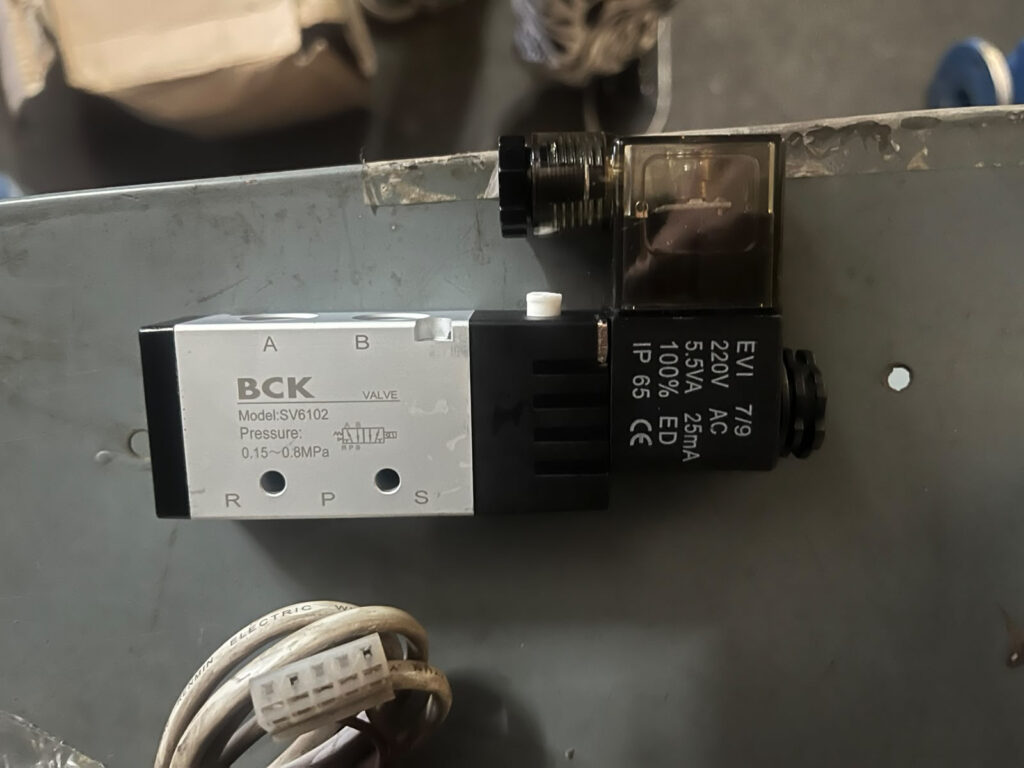
Every concrete batching plant runs on two things: material and air. The material makes the concrete. The air makes the plant move. At the heart of that pneumatic system sits a small but critical component: the solenoid valve 5/2 way 220v coil. This device is the traffic controller for your compressed air, directing it to cylinders that open gates, operate discharge chutes, and control the precise movement of materials through your plant .
Without it, your plant is just a pile of steel and motors. With a faulty one, your production grinds to a halt.
In this guide, we will explain exactly what this valve is, how it works, why it is essential for your batching plant, and what to do when it fails.
What Is a Solenoid Valve 5/2 Way 220V Coil?
Let us break down the name into its components.
- Solenoid Valve: A valve that uses an electromagnetic coil to control the flow of air or fluid. When electricity flows through the coil, it creates a magnetic field that moves a plunger, which shifts the internal spool of the valve .
- 5/2 Way: This refers to the valve’s configuration. It has five ports and two positions .
- Five ports: One supply port (air in), two actuator ports (air to the cylinder), and two exhaust ports (air out).
- Two positions: The internal spool can be in one of two states. In one position, air flows to extend a cylinder; in the other, air flows to retract it .
- 220V Coil: The solenoid coil is rated for 220V AC power, which is standard in many industrial environments . The coil is what converts electrical energy into the mechanical force that shifts the valve .
A solenoid valve 5/2 way 220v coil is essentially a double-acting cylinder controller. It allows you to send air in two directions, making it ideal for applications where a cylinder needs to push and pull, such as opening and closing a gate or moving a discharge chute .
What Does It Do in a Concrete Batching Plant?
The pneumatic system in a concrete batching plant is responsible for a wide range of critical actions :
Silo Discharge Control
The valve controls the pneumatic cylinders that open and close the discharge gates on your cement and aggregate silos. A 5/2 valve ensures the gate opens fully and closes securely.
Weigh Batcher Operation
During the batching process, the 5/2 solenoid valve directs air to the cylinders that operate the weigh hopper gates. It ensures that the precise amount of material is released into the mixer at the right moment .
Aggregate Batching
The valve controls the air cylinders on the aggregate batcher gates, allowing the plant to accurately dose different sizes of stone and sand.
Discharge Gate Control
The valve controls the discharge chute and mixer discharge gates, ensuring that the finished concrete is released smoothly and efficiently .
How Does It Work?
The operation of a solenoid valve 5/2 way 220v coil is elegantly simple:
The valve has two solenoid coils, one on each end .
A momentary electrical signal to one solenoid shifts the spool into the first position . Air flows from the supply port to one cylinder port, extending the cylinder. The air from the other side of the cylinder exhausts through the corresponding exhaust port.
When the cylinder needs to retract, a momentary signal is sent to the second solenoid. The spool shifts to the second position. Air now flows to the other cylinder port, retracting the cylinder while the first side exhausts .
This is known as a double solenoid, bi-stable valve. It stays in its last position even if power is lost . This is a crucial safety feature. If your plant loses power mid-cycle, the valve will not suddenly shift and cause a gate to drop unexpectedly.
Common Applications in a Batching Plant
Here are the specific places in your plant where you will find this valve:
- Mixer Discharge Gate: The valve controls the air cylinder that opens and closes the heavy gate at the bottom of the mixer .
- Weigh Hopper Gates: It controls the air cylinders on the cement, fly ash, and water weigh hoppers.
- Aggregate Batching Gates: It is used on the aggregate batcher gates that dispense stone and sand into the weigh hopper .
- Silo Aerators and Flow Aids: The valve can control the air flow to silo aeration pads or pneumatically operated flow aids.
Failure Symptoms and Troubleshooting
When a solenoid valve 5/2 way 220v coil starts to fail, the symptoms are usually unmistakable:
1. Cylinder Does Not Move
The gate or cylinder does not open or close. This could be due to a failed coil, a stuck spool, or an electrical issue.
2. Slow or Erratic Operation
The cylinder moves slowly or jerks. This can indicate a partially blocked exhaust port, low air pressure, or contamination inside the valve body .
3. Valve Does Not Shift
You hear the solenoid click, but the air does not flow. This could mean the spool is stuck due to dirt, sludge, or a worn seal .
4. Continuous Air Leakage
Air hisses from the exhaust ports when the valve is supposed to be stationary. This indicates worn seals or a damaged internal spool.
5. Coil Burnout
The coil burns out and fails to create the magnetic field to move the plunger. This can be caused by voltage fluctuations or incorrect coil installation .
Troubleshooting Steps
- Check the Manual Override: Most 5/2 valves have a manual override button . Press it to manually shift the valve. If the cylinder moves, the valve is mechanically sound, and the problem is likely electrical.
- Check the Voltage: Use a multimeter to measure the voltage across the coil terminals. It should read the rated voltage of 220V AC, with a tolerance of approximately ±10% . If the voltage is significantly low, check the control circuit and wiring .
- Measure Coil Resistance: Unplug the coil and measure its resistance with a multimeter. A healthy coil should read anywhere from a few hundred to a few thousand ohms . If the resistance is very high (open circuit) or very low (short circuit), the coil is likely burned out and needs replacement .
- Inspect for Contamination: Remove the valve and check the internal spool for sludge, rust, or debris . Clean or replace the valve as necessary.
Selection Guide: What to Look For
When sourcing a new solenoid valve 5/2 way 220v coil for your plant, consider the following factors:
|
Specification |
What to Look For |
Why It Matters |
|
Voltage |
220V AC |
Must match your plant’s power supply . |
|
Valve Type |
5/2 Way Double Solenoid |
Bi-stable operation keeps gate position if power is lost . |
|
Port Size |
1/4″ to 1/2″ NPT or BSPP |
Must match your existing piping. Common sizes include 3/8″ and 1/2″ . |
|
Pressure Range |
Up to 145 PSI (10 bar) minimum |
Must handle your plant’s air compressor output . |
|
Flow Rate (Cv) |
1.4 to 12 Cv |
Higher flow rates allow faster cylinder operation . |
|
Material |
Anodized aluminum body with NBR seals |
Resists corrosion and wear in harsh environments . |
|
Manual Override |
Non-locking or locking |
Allows manual operation during troubleshooting and emergencies . |
The Bottom Line
The solenoid valve 5/2 way 220v coil is a small component with a massive responsibility. It is the brain behind your pneumatic system, directing compressed air to the cylinders that make your batching plant function.
Understanding how it works, how to spot failure symptoms, and how to troubleshoot it can save you hours of downtime and thousands of rands in lost production. Keep spare coils and valves in your maintenance store, and ensure your air supply is clean and dry to extend their service life.