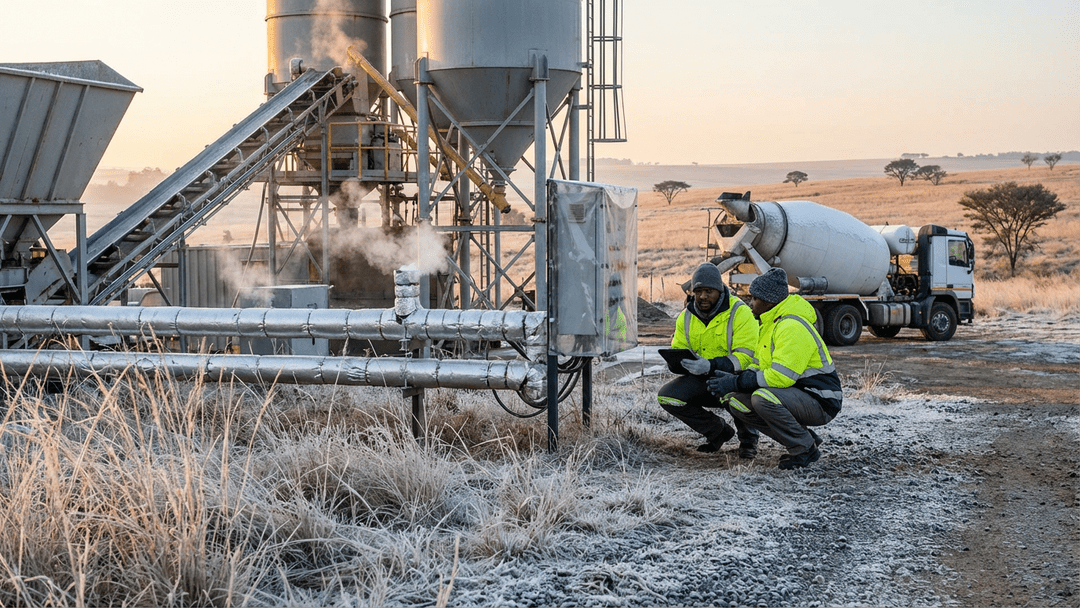
While much of South Africa enjoys a mild climate, the high-altitude regions of the Highveld, including Gauteng and the Free State, as well as parts of the Western Cape, can experience significant frost and freezing temperatures during the winter months. For concrete producers in these areas, the cold is more than just an inconvenience; it’s a direct threat to the integrity of their product and the health of their equipment. Concrete production in cold weather can be a challenge, from freezing water lines, to compromising the performance of pneumatic systems. This guide provides essential winterisation strategies to protect your batch plant components and ensure you can continue to produce high-quality concrete, even when the temperature drops.
How Cold Temperatures Affect Your Batch Plant
Freezing temperatures can impact nearly every part of your operation:
- Water Systems: This is the most vulnerable part of your plant. Water freezing in pipes, pumps, or a water meter can cause them to burst, leading to costly repairs and significant downtime. Ice in the mix water also makes it impossible to achieve the correct water-cement ratio, compromising the concrete’s strength.
- Pneumatic Systems: Compressed air contains moisture. In cold weather, this moisture can freeze within pneumatic lines and valves, causing them to seize or malfunction. This can affect everything from the operation of butterfly valves on your silo to the pulse-jet cleaning system on your dust collector.
- Conveyors and Gates: Ice and frozen material can build up on conveyor belts and jam silo gates, preventing the free flow of aggregates.
- Hydraulic Systems: Hydraulic oil becomes more viscous (thicker) in the cold, which can make systems sluggish and put a strain on pumps and motors.
Winterisation Strategies for South African Highland Regions
Proactive preparation to ensure concrete production in cold weather is key to a successful winter production season. Here are the essential steps to take before the first frost hits:
1. Protect Your Water System
This is your top priority.
- Insulate and Heat Trace: All exposed water pipes must be thoroughly insulated. For regions with hard freezes, installing electrical heat tracing—a cable that warms the pipe—is a necessity.
- Drain the System: At the end of each production day, completely drain all water lines, pumps, and meters. Install low-point drains to make this process quick and easy.
- Heated Water: For producing concrete in sub-zero temperatures, a water heater (boiler) may be required to heat the mix water, which helps the concrete cure properly.
2. Keep Your Pneumatic System Dry
The best way to prevent your pneumatic system from freezing is to remove the moisture from the compressed air.
- Air Dryers: Installing a refrigerated or desiccant air dryer after your air compressor is the most effective solution. This removes the water vapor before it has a chance to freeze in the lines.
- Water Traps: At a minimum, ensure that every major air drop has a water trap, like the Air Regulator with Water Trap (R1,215) from Nsimbi Engineering Solutions. These must be drained daily.
3. General Equipment Protection
- Conveyor Belts: Run the belts for a few minutes at the end of the day to clear any residual material that could freeze overnight.
- Silo Gates: Keep gate mechanisms clean and lubricated to prevent ice from causing them to bind.
- Gearboxes: Ensure you are using the correct grade of lubricant for low-temperature operation.
- Fuel Storage: If you have diesel-powered equipment, use a winter-grade diesel blend to prevent gelling.
The Cost of Being Unprepared
Failing to winterise your plant can be incredibly costly. A single burst water pipe can lead to a full day of lost production. A frozen pneumatic valve can stop your entire batching process. The cost of a few rolls of insulation, some heat tape, and a quality air dryer is a small fraction of the revenue lost from a single day of winter-related downtime.
Conclusion
Cold weather concrete production in South Africa’s highland regions requires a proactive and systematic approach to plant winterization. By focusing on protecting your water and pneumatic systems, you can prevent the most common and costly winter-related failures. Don’t let a cold snap catch you by surprise. Prepare your plant before the winter season arrives to ensure a safe, efficient, and profitable operation, no matter the weather.
For essential winterisation components to ensure ongoing concrete production in cold weather like air regulators with water traps and other robust batch plant parts, servicing and maintenance, contact Nsimbi Engineering Solutions. Their team can help you get your plant ready to face the challenges of the South African winter.